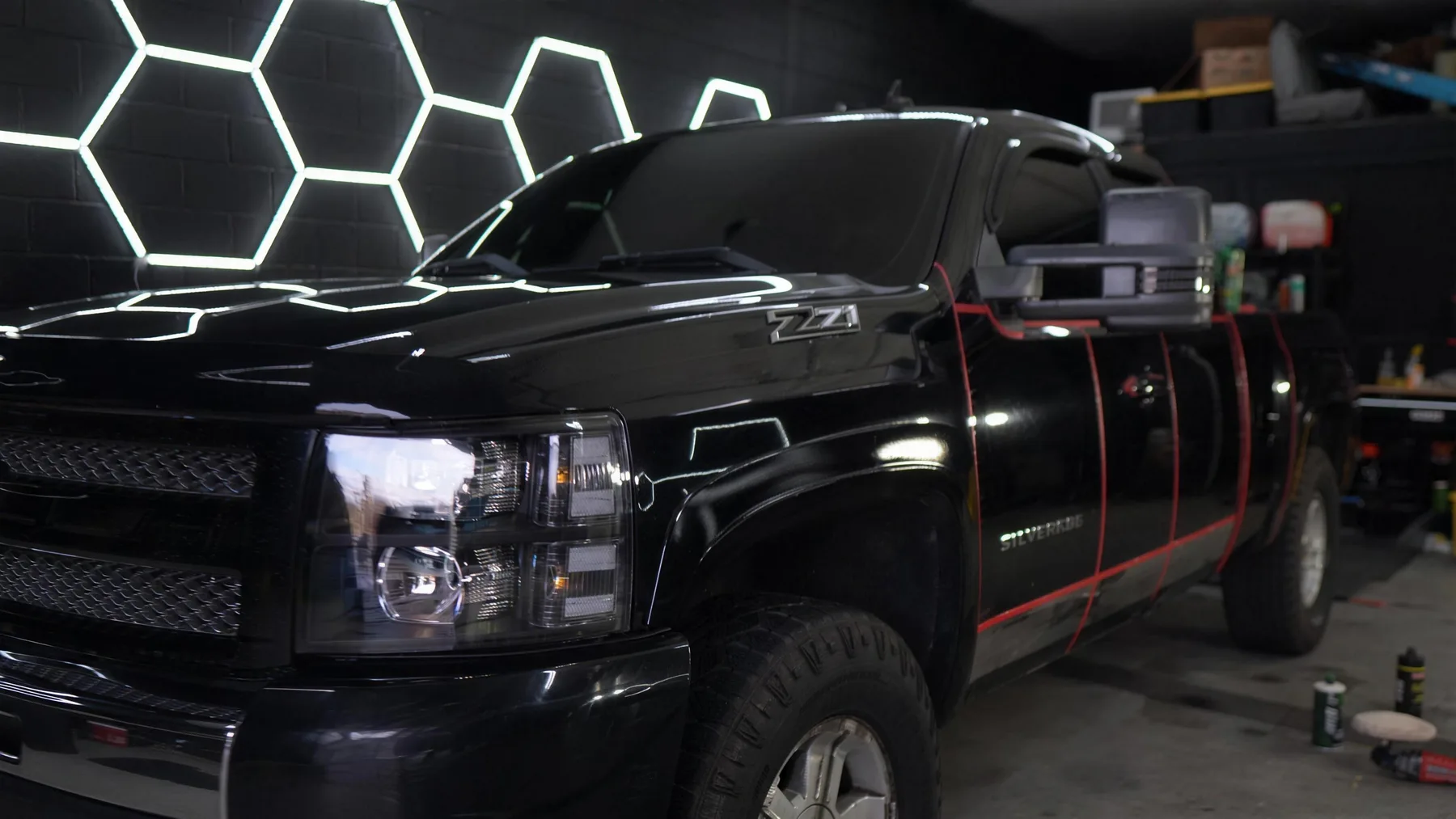
How much does paint correction cost?
At Get Detailed MI in Wayne, paint correction is priced by vehicle size: a 1 step runs from $350 for a coupe to $575 for an XL SUV, a 2 step from $550 to $900, and a 3 step from $800 to $1,300. Black or badly marred paint can carry an upcharge because the same finish takes more passes. The free test spot is how we settle which tier your paint needs before you commit to a number.
Is paint correction just buffing?
No. Buffing often means one quick pass, sometimes with a glaze or filler that hides swirls until the next few washes. Paint correction is measured machine polishing that takes the defects out of the clear coat. We use no glazes or fillers, so what you see at pickup is the actual corrected surface. Read the full guide.
Why is paint correction so expensive?
Because it is hours of skilled machine work on every panel. A 1 step is one full pass over the car, and a 3 step is three. Each stage is checked under controlled light before the next one starts. That is why a 1 step starts at $350 and a 3 step at $800 for a coupe. The free test spot lets you see the result on your own paint before you pay.
Is paint correction worth it?
It is worth it when swirls, haze or water spots bother you, and before any ceramic coating. It changes how paint looks more than any wash or wax can. If your paint is already in good shape, a 1 step or no correction at all may be the right answer, and we will say so. The free test spot lets you judge it on your own car.
Can I really get a free test spot?
Yes, Get Detailed MI corrects one section of your vehicle at no charge at the Wayne shop. Call or text us, or stop by. It is the fastest way for both of us to find out what your paint will do and which tier makes sense.
What is the difference between 1, 2 and 3 step correction?
The difference between 1, 2 and 3 step correction is how many machine passes your paint gets. One step clears light swirls and wash marring, around 50 to 75 percent of the defects. Two steps cut and then refine, which takes most daily drivers to 80 to 95 percent. Three steps is for paint that has been neglected, oxidised or badly marred. The free test spot is how we work out which one your paint actually needs.
Can you remove water spots and oxidation?
Usually, yes. Hard water spots that have etched into the clear coat, and the dull chalky look of oxidation, both come out with machine polishing, which is what correction is. What cannot be polished out is anything that has gone through the clear coat: if your fingernail catches in it, it needs paint rather than polish, and we will show you which of your defects fall into each group.
How long do you need my car for paint correction?
It depends on how many stages your paint needs. A 1 step is the shortest job and a 3 step the longest, because each stage is another full machine pass over every panel. If you add a ceramic coating, the car also stays for the coating’s full 24-hour cure, which we do not shorten. You get the exact drop-off and pickup window with your quote, before you book.
Will correction remove every scratch?
No, paint correction will not remove every scratch, and be sceptical of anyone who promises it will. The fingernail test is the honest one: if your nail catches in a scratch, it has gone through the clear coat, and polishing alone cannot take it out without cutting through the clear coat too. Scratches that have not gone that deep do come out. We will show you which of your defects are correctable before we start.
Can you fix a deeper scratch that polishing will not remove?
Often, yes. Where there is no paint loss, a deeper scratch can be wet-sanded level and then refined back to gloss, which goes further than machine polishing alone. Where the scratch has gone through to the primer or the metal, we can apply a paint-pen touch-up to seal it and make it far less visible, but that is a touch-up and not a repair. We do not respray panels and we do not do bodywork. If your car needs either, we will tell you straight and point you to a body shop rather than sell you polishing that will not fix it.
How long does paint correction last?
The defects that are removed do not come back on their own. What brings swirls back is washing: brush car washes and a dirty mitt put new marring in within months. Careful hand washing, or a ceramic coating over the corrected paint, is what makes the result last for years.
How often should you get paint correction?
Most cars need a full correction once, not on a schedule. After that, how the car is washed decides it. Coated, hand-washed paint may never need another full correction. Paint that goes through brush washes can need a light 1 step again sooner.
Can I do paint correction myself?
You can learn to, but mistakes are costly. A machine polisher removes clear coat, and clear coat does not grow back. Resprayed or thin panels are easy to cut through. The free test spot shows you what a professional result looks like on your own paint first.
Why do black vehicles cost more?
Black and very dark paint shows every defect, so the same standard of finish takes more passes to reach. Depending on severity there may be an upcharge, and we will tell you that when we quote rather than at pickup.
Is correction safe for my clear coat?
Done properly, yes. The risk comes from cutting aggressively without checking, particularly on panels that have been resprayed and are already thin. That is why we inspect first and why we will recommend a lighter tier when the paint calls for it.
Do I need a coating afterwards?
You do not have to. Every correction we do, 1 step included, finishes with a sealant. But corrected paint with only a sealant will swirl again from washing within months. If you want the work to hold for years, pairing it with a ceramic coating is the logical step, and we have combined packages that price the two together.