
What Is Paint Correction, and Is It Just Buffing?
By Moody Sobh, Owner, Get Detailed MI ·
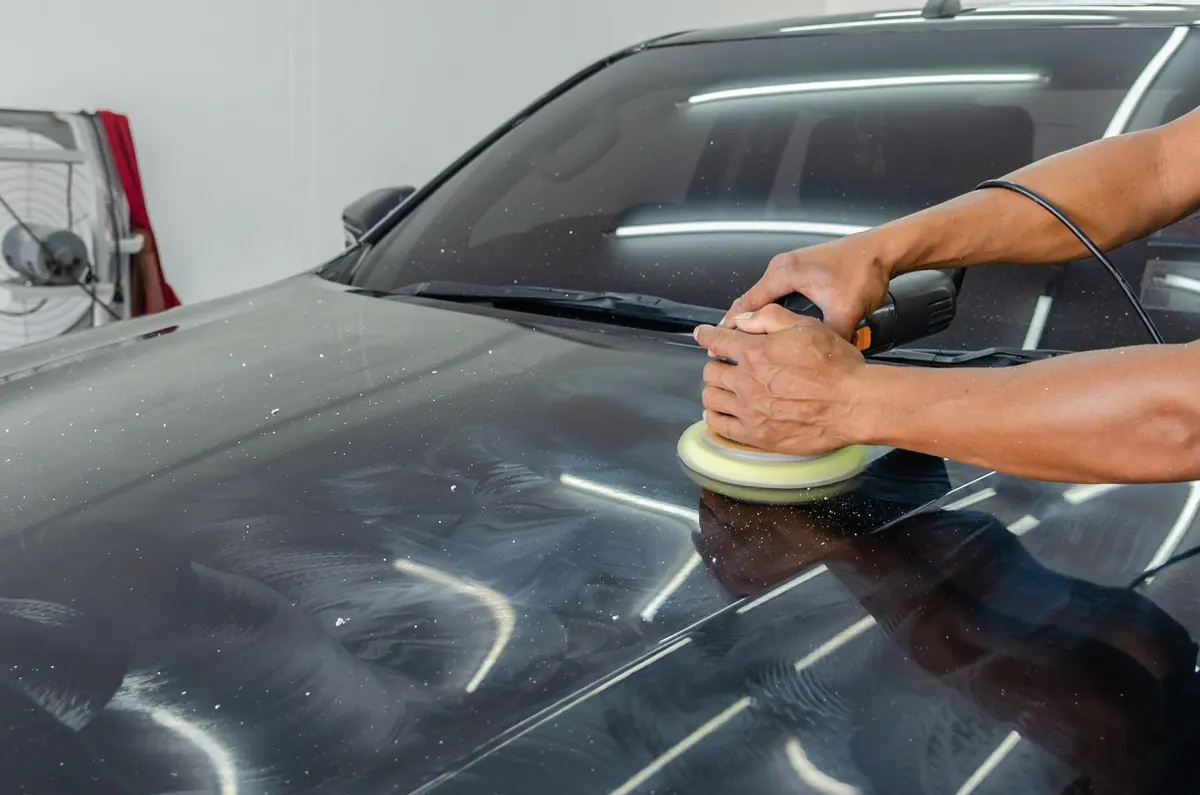
Paint correction is machine polishing that levels the top of your car's clear coat. The clear coat is the transparent layer over the color. Swirls, light scratches, water-spot etching and oxidation all sit inside it. Polishing away a sliver of it takes them out.
If you already know you want it done, go straight to paint correction in Wayne, MI.
What does paint correction actually do to your paint?
Car paint is built in layers, as car paint maker PPG sets out: a primer, a colored basecoat and a clear topcoat. That top layer is the clear coat. It carries the gloss and protection, and it's the only layer correction works in.
Swirls and light scratches are tiny grooves in its surface. Correction lowers the surface around them until it's level again. Once it's down to the bottom of the grooves, there's nothing left to see.
Every tier starts with a full decontamination wash and a clay treatment, so the polisher works on clean paint.
Then the paint gets one, two or three polishing stages, depending on the tier. After each stage, a check under controlled light shows what's left. That way the finish is judged before the car goes back to you.
Leveling matters because of light. On a level surface, light comes back evenly and you see the color clearly. Swirls break that surface into a web of tiny edges, each throwing light off at its own angle. Together they lay a gray haze over the paint, clearest in direct sun. Take them away, and the color underneath shows through again.
Is paint correction just buffing?
Not in the usual sense. "Buffing" gets used for almost any job done with a polishing machine, and some of those jobs only hide the marks.
The catch shows up later, not at pickup. A product that fills scratches can make swirled paint look flawless for a while. Then washing wears it out, and the marks it was covering come back.
When you talk to a shop about correction, two questions tell the difference:
- Is anything going on the paint to fill the scratches?
- Will the finish still look right after several washes?
Correction takes the marks out of the clear coat rather than covering them, and we don't use fillers. So the answers are no, and yes, as long as the washing is careful.
What can paint correction fix, and what can't it?
It fixes damage that sits inside the clear coat. Damage that has gone below it is a job for a paint shop.
- Yes: swirls and wash marring, the fine circular marks you see in direct sun, plus light scratches within the clear coat.
- Usually: water spots that have etched into the finish, and oxidation, where neglected paint has turned dull and chalky.
- No: scratches that have gone through the clear coat.
A new car isn't automatically swirl-free, so inspection decides. When the paint is practically new or already polished, it can skip correction: a hand wash and panel prep come before a coating instead.
How deep a scratch can it fix?
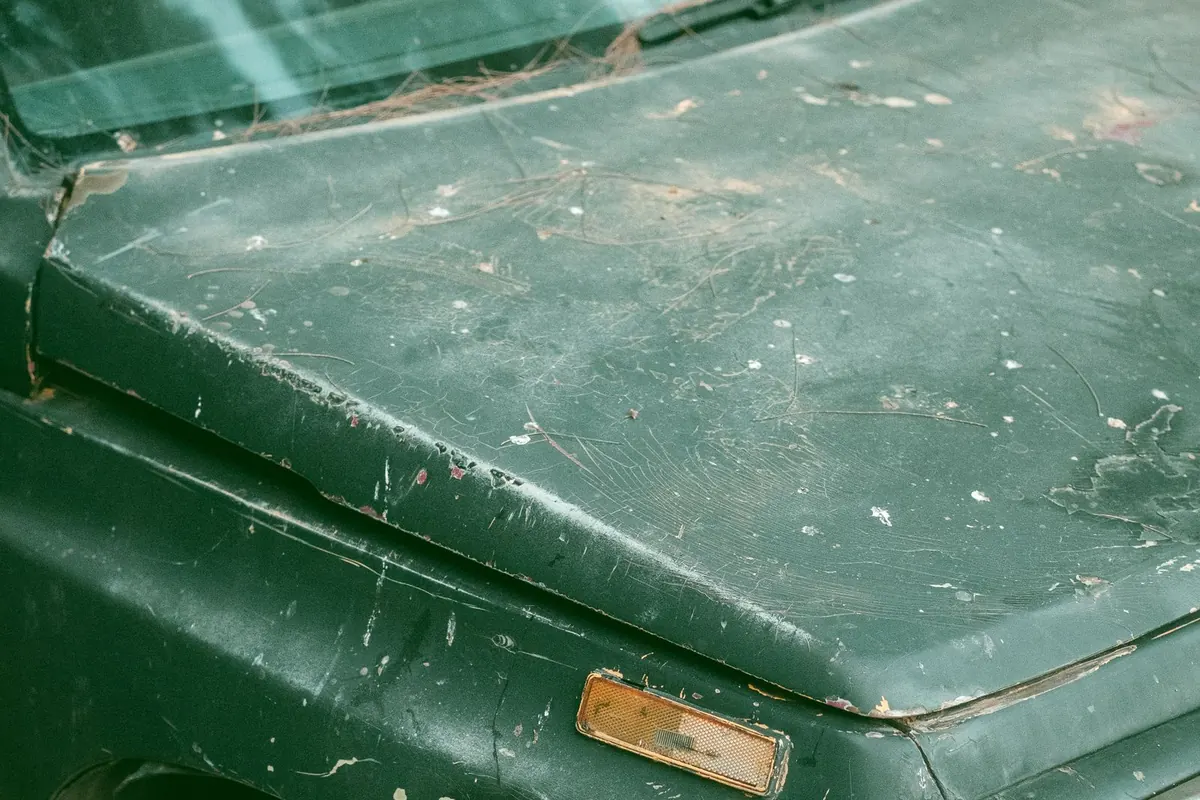
Only a scratch still inside the clear coat can be corrected. A fingernail is a quick way to tell.
Drag it gently across the scratch. If it glides over, correction may remove it. If it catches, it's through the clear coat. It needs paint, and we don't do paintwork.
1-step, 2-step or 3-step: what's the difference?
The tiers differ in how many polishing stages the paint gets. More stages mean more time on every panel, and more defects removed.
1-step correction
- Stages
- One polishing stage
- Suited to
- Light swirls and wash marring on newer cars or paint in decent shape
- What to expect at our shop
- Around 50 to 75 percent of defects removed
2-step correction
- Stages
- A cut, then a refine
- Suited to
- Heavier swirls and scratches on a typical daily driver
- What to expect at our shop
- Around 80 to 95 percent of defects removed
3-step correction
- Stages
- Heavy cut, refine, then finish
- Suited to
- Neglected, oxidized or badly marred paint
- What to expect at our shop
- The highest removal of the three, within what the clear coat can spare
| Tier | Stages | Suited to | What to expect at our shop |
|---|---|---|---|
| 1-step correction | One polishing stage | Light swirls and wash marring on newer cars or paint in decent shape | Around 50 to 75 percent of defects removed |
| 2-step correction | A cut, then a refine | Heavier swirls and scratches on a typical daily driver | Around 80 to 95 percent of defects removed |
| 3-step correction | Heavy cut, refine, then finish | Neglected, oxidized or badly marred paint | The highest removal of the three, within what the clear coat can spare |
These ranges are our own figures, not an industry standard or a promise.
Starting prices for a coupe are $350 for a 1-step, $550 for a 2-step and $800 for a 3-step. Vehicle size and paint condition set the final number.
What is a 2-step paint correction?
A 2-step paint correction uses two polishing stages. The first is a cut that levels heavier swirls and scratches. The second refines the surface and brings the clarity back.
How is a 3-step correction different from a 2-step correction?
A 3-step correction differs in two ways. Its first cut is heavier, and a finishing stage follows the refine. Isolated deeper defects can need extra attention too.
Two recent jobs, two different tiers
Two recent jobs for one client show how the paint sets the tier. A 2022 BMW X7 M50i had moderate scratches and swirls. It got a 2-step correction, then a 3-year ceramic coating to protect the finish and keep maintenance easy.
The other, a 2014 Mercedes E63 S AMG, had been coated three years earlier. It got a 1-step to bring the paint back, then a new 3-year coating.
We chose each package for the result that car needed and where the client saw the most value.
Dark paint needs extra passes
Dark paint shows marring more plainly. Each fine scratch has edges that catch light, and those bright edges stand out against a dark base.
On a black car, your quote may include an upcharge, depending on how heavy the marring is. You'll see it before you book. It's there because bringing dark paint to the same standard takes more rounds with the polisher.
The payoff is also easiest to see on dark paint.
Does paint correction ruin your clear coat?
No, not when it's done properly. Correction does take off a very thin layer of clear coat, so the real questions are how much and where.
What matters is checking each panel before choosing how hard to cut. A panel resprayed after a repair may already have thin clear coat, which is easy to go through.
We aim for the finish you want while spending as little clear coat as we can. If a lighter tier gets you there, we'll say so.
How many times can paint be corrected?
There's no set number. Once clear coat is polished off, it's gone, so every car has a limited amount to work with.
How many corrections your paint can take depends on how much each one uses. Choosing the lightest tier that works, and washing so swirls don't return quickly, both leave more for later.
How long does paint correction last?
The correction itself doesn't wear off, and polished-out marks stay gone. Swirls that show up later are new damage.
The wash is the biggest single source of it. A dirty mitt or a car-wash brush drags whatever is on it across the paint. The fine lines it cuts add up to the swirls you see in sunlight.
A careful routine covers five things:
- Wash by hand from two buckets, so the mitt gets rinsed before it goes back on the paint.
- Start every wash with a clean microfiber mitt.
- Choose a car soap that's pH-neutral. Dish soap doesn't belong on paint.
- Keep one towel just for drying.
- Keep brush car washes out of it entirely.
Every correction tier finishes with a sealant, but it's a short-term layer that won't stop wash marring. A ceramic coating is the longer-term option. Not every car gets real value from one. For those, a sealant or wax as part of a detail may be the better fit. Careful washing alone can keep a correction looking right for years, so a coating isn't required.
If you go the coating route, correct first. A coating seals in whatever is on the paint when it goes on, swirls included. Our ceramic coatings come as 1, 3 and 5 year options. Those years are expected life with proper care, not a warranty.
For prices by vehicle size, see what ceramic coating costs. To decide whether your car needs both, read paint correction vs ceramic coating.
How often should you get paint correction?
When swirls come back, and you can check for that yourself. Look at the paint in direct sun, or under a single bright light. Stand off to one side so you're seeing the panel at an angle.
Fine circular marks around the reflection of the light mean marring has returned. Fresh marring is usually light, so the next job is often a smaller one than the first.
How we decide which tier your car needs
We choose the tier in person, at the shop, under our lights. Photos help us get a sense of the car, but they can't show how deep the marks go.
- Inspection. We look over each panel for swirls, scratches, etching, oxidation and signs of a respray. You'll see which marks are correctable and which would need paint.
- Test spot. One section of your paint gets corrected at no charge. Seeing it beside the uncorrected paint around it shows which tier gets you the finish you want.
- Quote. You get the price, plus the drop-off and pickup window, before you book. The quote is the price.
Getting paint correction in Wayne
If your paint looks hazy or swirled in the sun, the next step is letting us see it. The shop is at 34101 Michigan Ave in Wayne.
Request a quote on our paint correction page or through the quote request form. Or call (313) 643-5463, or text a few daylight photos to that number with your year, make and model.